Topic
Infrastructure
Data centres, chips, energy and cloud capacity behind AI, and how spending and shortages affect the price and availability of models.
6 analyses
 Photo: Official White House Photo by Joyce N. Boghosian, US government work
Nvidia took Jensen Huang back after the White House weighed in. The chip question that forced him out is still open.
Nvidia's board unanimously reinstated Jensen Huang as chief executive on 23 November, eleven days after he resigned, citing input from senior US officials. The shares rose about 31%. The investigation into the foreign intelligence effort aimed at him continues, and Democrats taking over Congress in January have promised their own.
 Photo: Alex-David Baldi, CC BY 4.0
Washington and eight partners have agreed to guard AI supply chains from China. Europe asked for more time, and it had good reasons.
The United States and eight partners signed the San Francisco Declaration on 15 November, agreeing to draw up a joint list of AI technologies and supply chains that need protecting from China. The EU stayed out of the first round over vague definitions and a US push on regulation, and is expected to sign next week. The list will decide which European suppliers get asked hard questions.
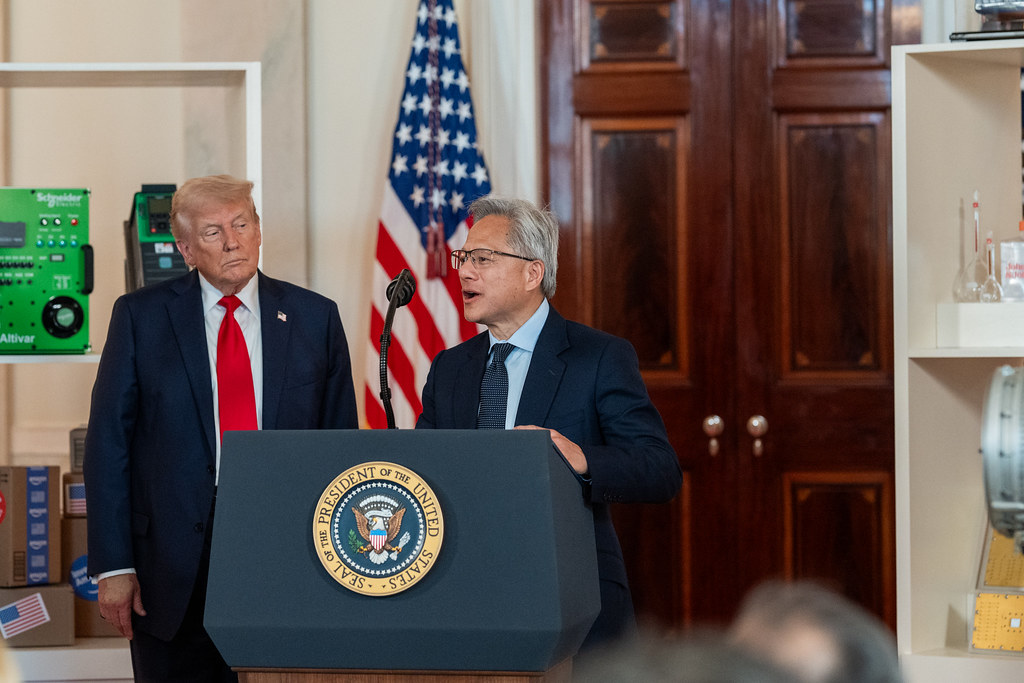 Photo: Official White House Photo by Joyce N. Boghosian, US government work
Jensen Huang has resigned from Nvidia. The bigger risk for Europe's AI plans is what Washington does next with the chips.
Nvidia's founder Jensen Huang resigned with immediate effect on 12 November, two weeks after reports linked him to a Megaspeed executive US officials believe works for Chinese intelligence. CFO Colette Kress is interim CEO. For European companies the leadership change matters less than the export rules Washington is now likely to tighten.
 Photo: nakashi, CC BY-SA 2.0
OpenAI has cut its funding target by a third. The investors still writing cheques want revenue, and that will show up in your contract.
OpenAI has lowered the target for its new funding round from $30 billion to $20 billion and the valuation from $1.4 trillion to $1.25 trillion, in a week when Alphabet had its worst day on record and S&P put Meta on watch. For companies buying AI, a lab that has to prove revenue to investors is a lab that will push for longer commitments.

Europe is finally paying for its own AI compute, and Denmark has put 750 million kroner on the table
Brussels opened bidding for up to seven AI gigafactories, Denmark committed money to buy capacity in one, and Mistral closed the largest funding round in European tech history. None of it changes where your AI runs this year, but it changes the options.
 Photo: Carlos Jones/ORNL, U.S. Dept. of Energy, CC BY 4.0
Big Tech is spending $725 billion on AI this year, and central banks are worried
The four biggest cloud companies are putting three quarters of a trillion dollars into AI infrastructure this year, and the world's central banks now list it as a financial risk. If your business runs on their AI, part of that risk is yours.